If you’ve ever sat there wondering what red flags to watch out for in eyebrow tattoo courses, you’re already ahead of the game – and as Uliana Kasperska, I can tell you that people usually come to that realisation when they’re in the middle of comparing eyebrow tattoo training options and start to notice all the differences between them. You deserve to learn proper permanent makeup techniques, not some watered-down version or a bunch of empty promises. In our Brisbane studio, where we specialise in all sorts of cosmetic tattooing, we see the long-term damage that bad training can do regularly.
Before you hand over your savings and your confidence as a future tattoo artist, let’s go over the real warning signs that a course isn’t worth your time or money.
Contents
The Problems New Students Often Overlook
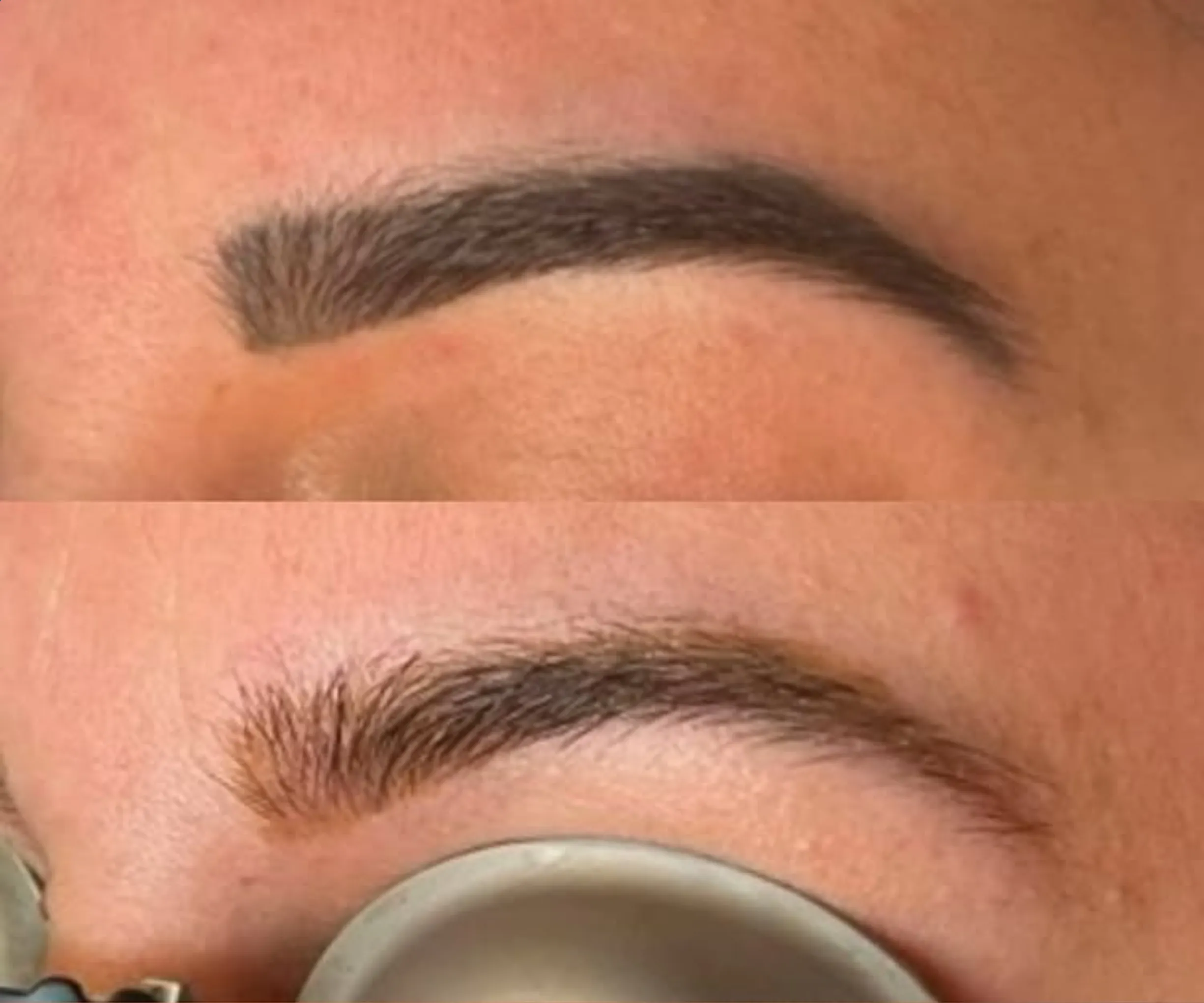
Every week, we get people coming in who’ve completed a “course” but still can’t even hold a microblading tool right. And it’s not because they’re clumsy – it’s because the course they took was rubbish. These warning signs pop up in eyebrow tattoo courses, eyeliner tattooing courses and even hybrid PMU programs.
No Infection Control Qualification
In Australia, especially in places like Brisbane that are so humid, good hygiene is a no-brainer when it comes to semi-permanent treatments. So, whether you’re signing up for eyebrow tattoo training or an eyeliner tattoo courses later down the line, you need to make sure the course covers Infection Control Standards.
We’ve seen students arrive with certificates that don’t even mention infection prevention – no sharps containers, no idea about clinical etiquette, no mention of blood-borne viruses. That’s just plain scary.
One-Day Courses With No Model Work
If you see a course saying you’ll be fully qualified in a day, just turn and run – it applies to all sorts of courses, from eyebrow tattoo training to any eyeliner tattoo course you might be thinking of doing in the future.
A proper brow artist needs to understand how the strokes of the tattoo machine behave on real skin, not just on fake models. And model work is especially important in places like Brisbane, where the climate means skin types can vary so much.
No Transparency About Who Actually Trains You
A real course will tell you who’s actually teaching, what their background in the tattoo industry is and how many years of brow experience they have.
Red flag: trainers with super vague bios or generic titles – or no photos of their work at all.
If the same company also offers an eyeliner tattooing course and can’t even be bothered to give you the names of the trainers, that’s a pretty big sign of a lack of credibility.
Outdated Techniques and Tools
If they’re still teaching you harsh old stroke patterns with no mention of modern permanent makeup techniques, that’s not quality education. We see this a lot in cheap eyebrow tattoo courses that promise to get it done fast but don’t actually teach you how to do it properly.
No Discussion About Contraindications or Client Safety
A dodgy course is all about getting you to focus on the pretty after photos.
A good educator – whether they’re teaching brows or an eyeliner tattoo course – will cover client safety, health risks, infection prevention, hygiene practices, and how sunlight and climate affect long-term tattoo results.
If they’re not covering at least some of those things, then that’s not a course you want to be in.
The Hidden Red Flags Most Beginners Miss
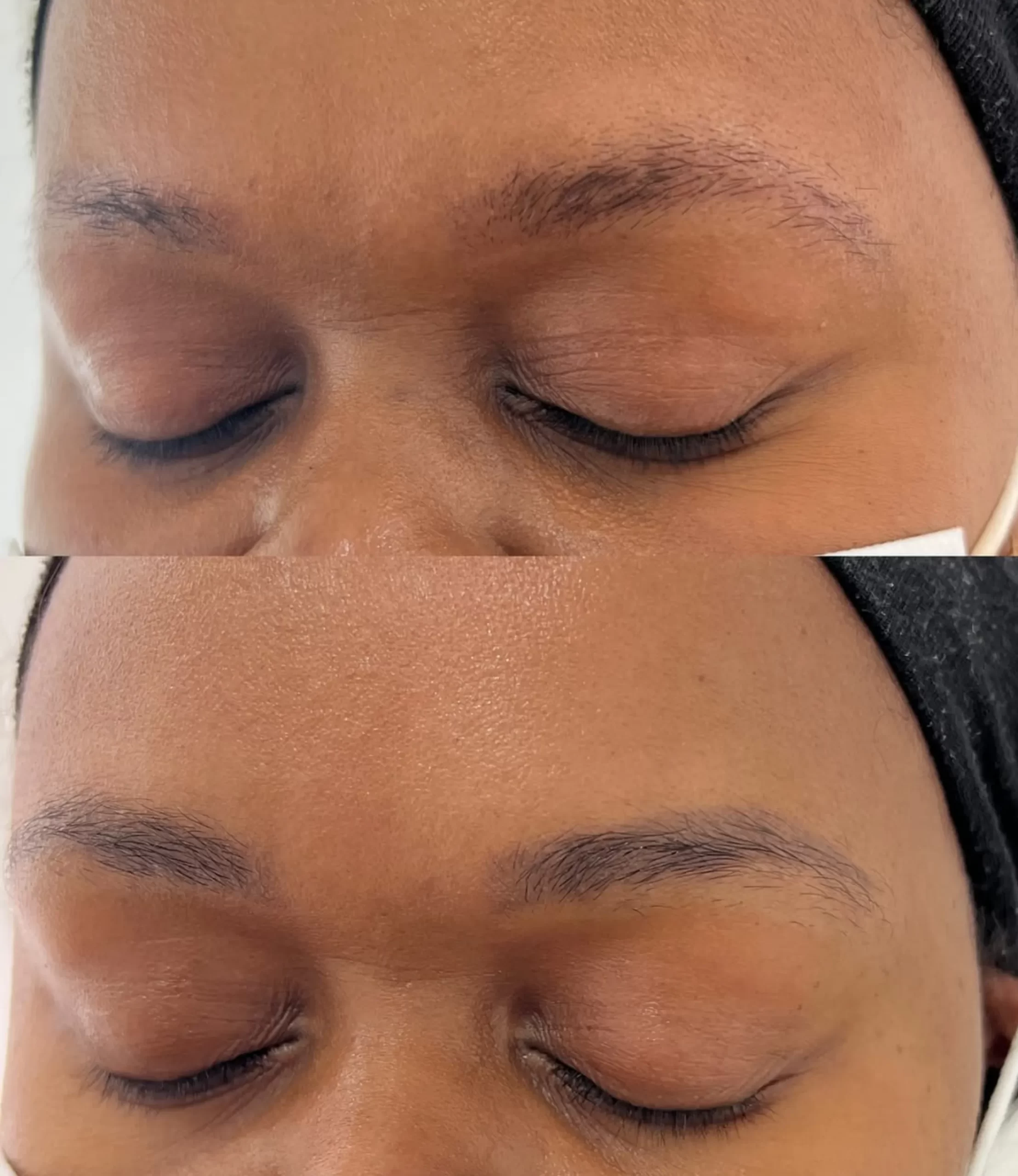
Some warning signs don’t jump right out at you, especially when training providers rely heavily on slick marketing to sell their courses.
No Healed Results to Show Off
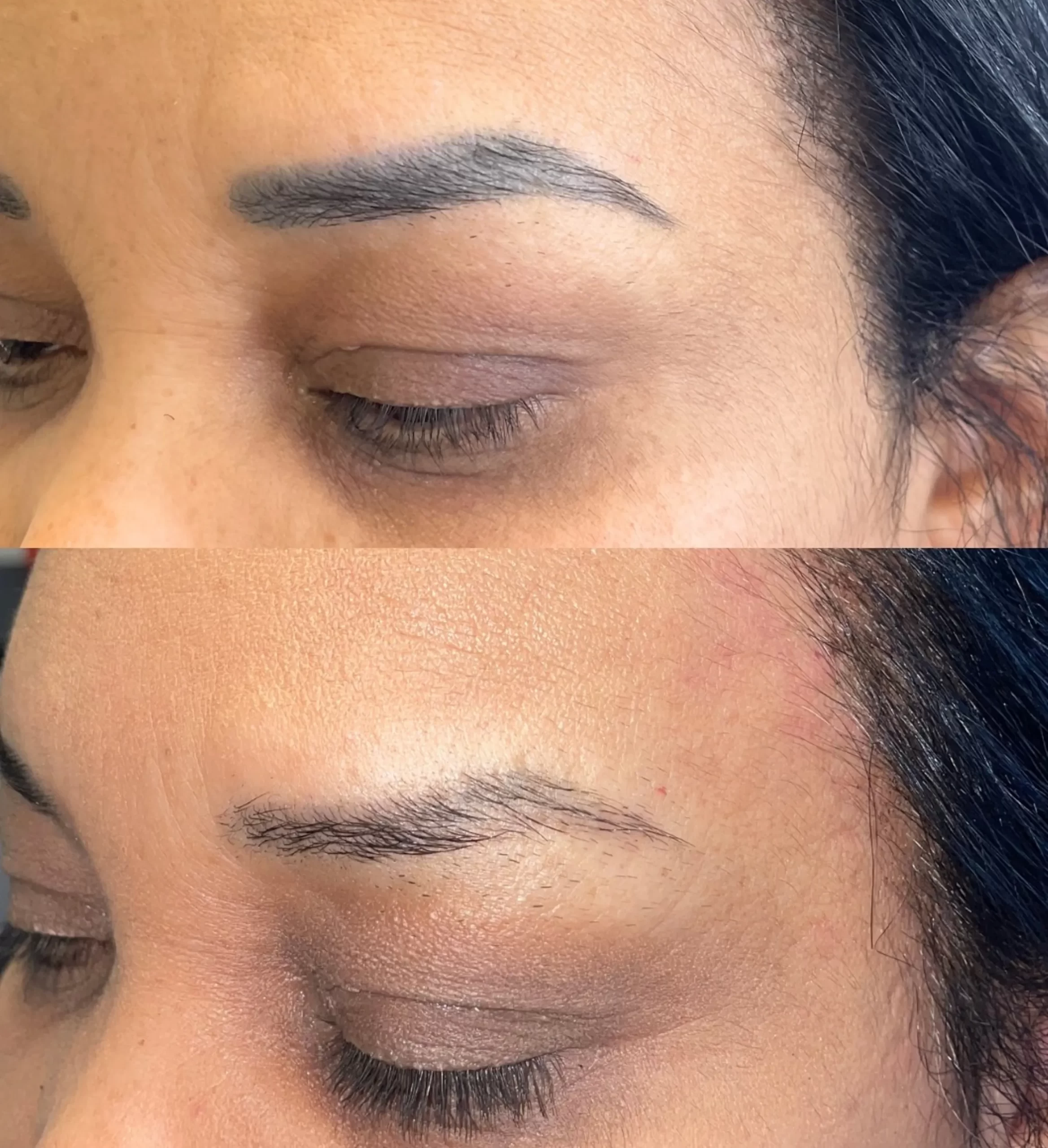
Photos of perfectly groomed eyebrows under studio lights are easy to come up with – but healed results are what really matter. A proper eyebrow tattoo training program shows healed work on different skin types, not just fresh results.
Teaching Every Student the Same Brow Shape
If a course teaches a single brow shape for every client, that’s a big problem. A quality program teaches custom brow mapping, correction techniques and adaptation to the individual.
No Ongoing Support Once You’ve Signed Up
Some students enrol thinking they’ll come back later for an eyeliner tattooing course, only to find there’s no ongoing support or follow-up. That’s a serious red flag.
No Examples of What Your People Can Do
A good educator will proudly show student work from beginner stages through to finished results. If you can’t see what past students achieved, it’s often because the results weren’t great.
Quick Comparison Table: Red Flags vs. Good Signs
| Course Red Flag | Why It’s a Problem | What a Good Course Offers |
|---|---|---|
| 1-day classes | No time to learn technique or hygiene | Multi-day education + model practice |
| No Infection Control | High health risks for clients | Infection Control Standards qualification |
| No healed work | Hides long-term issues | Fresh + healed portfolios |
| One brow shape taught | Not personalised | Custom mapping by skilled brow artists |
| No support | Students feel unprepared | Ongoing mentoring |
| Outdated tools | Unsafe or inconsistent results | Modern microblade tools + machine skills |
Brisbane-based reporting in 2025–2026 showed over 60% of tattoo industry complaints originate from rushed, low-quality training programs.
Stories From Our Brisbane Studio
We’ve had students come to us from other places who’d done eyebrow courses but had never learned basic hygiene practices. One girl had no idea how to safely dispose of microblade tools – yet she’d been told she was a professional.
Another student completed an eyeliner course without any education around blood-borne viruses. Stories like these highlight exactly why infection control must sit at the core of any cosmetic tattoo course.
How To Evaluate a Course Before You Pay
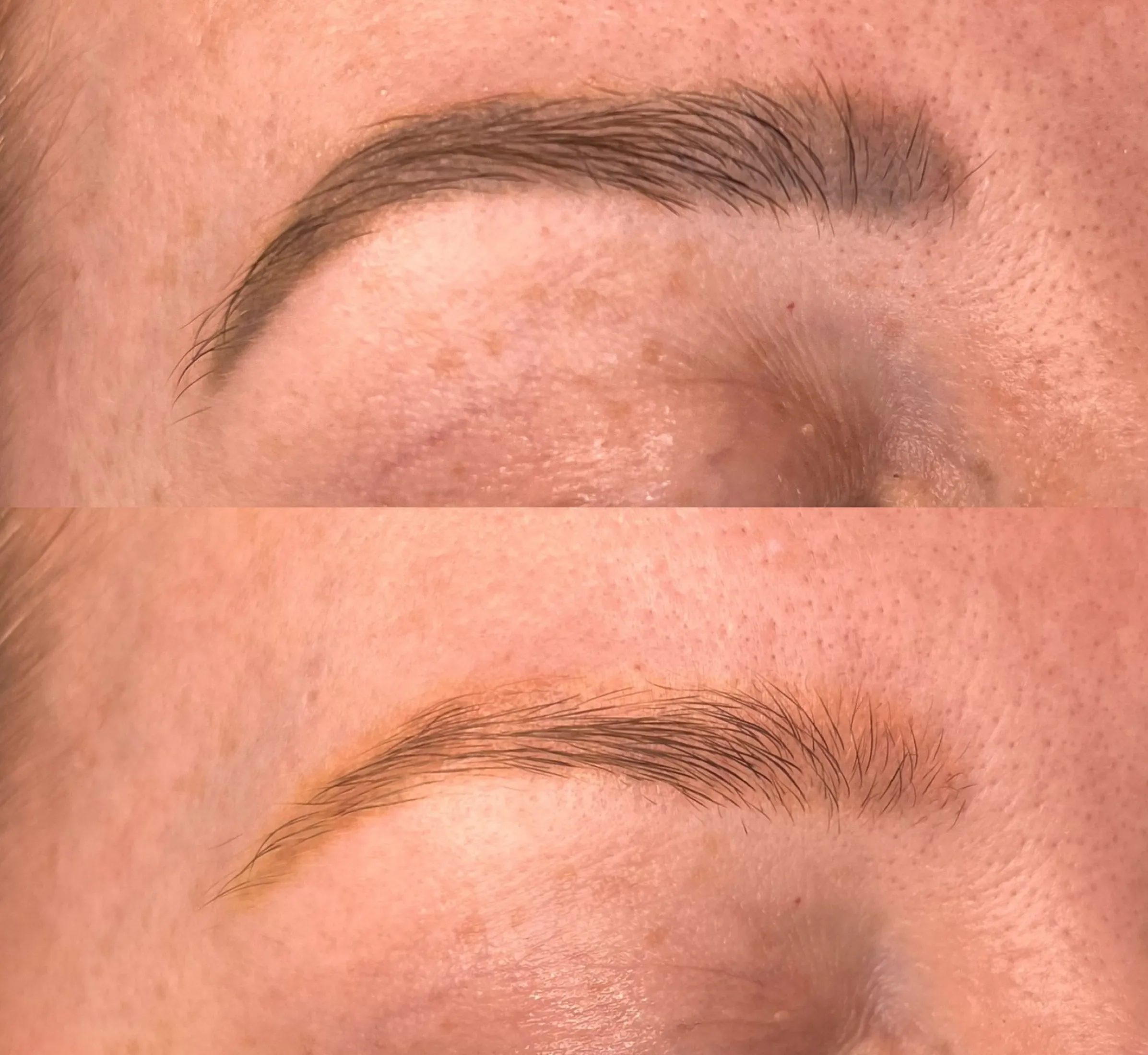
Picking the right eyebrow course isn’t just about the pretty photos on the website. It’s about finding someone who can safely teach you all the ins and outs of permanent makeup – and help you build a real career.
Do They Teach Colour, Skin, and Safety Theory?
If they don’t cover skin science, pigment theory, health risks, and infection control standards, it’s missing out on some pretty essential safety fundamentals.
Do They Show Real Case Studies?
The trainers should be showing you some healed work, some bad experiences, corrections, and touch-ups – whether you’re just starting with brows, or planning to add eyeliner later down the line.
Do They Teach Troubleshooting and Corrections?
A good teacher teaches you how to avoid mistakes in the first place – and how to fix them when they inevitably happen.
Do They Explain Salon & Equipment Setup?
You should be getting some guidance on things like:
- Keeping the workspace clean
- Handling tools safely
- How to do the proper clean-ups
- Getting rid of sharp objects safely
All these things are basics for safe cosmetic tattooing.
Final Reflection — And A Friendly Invitation
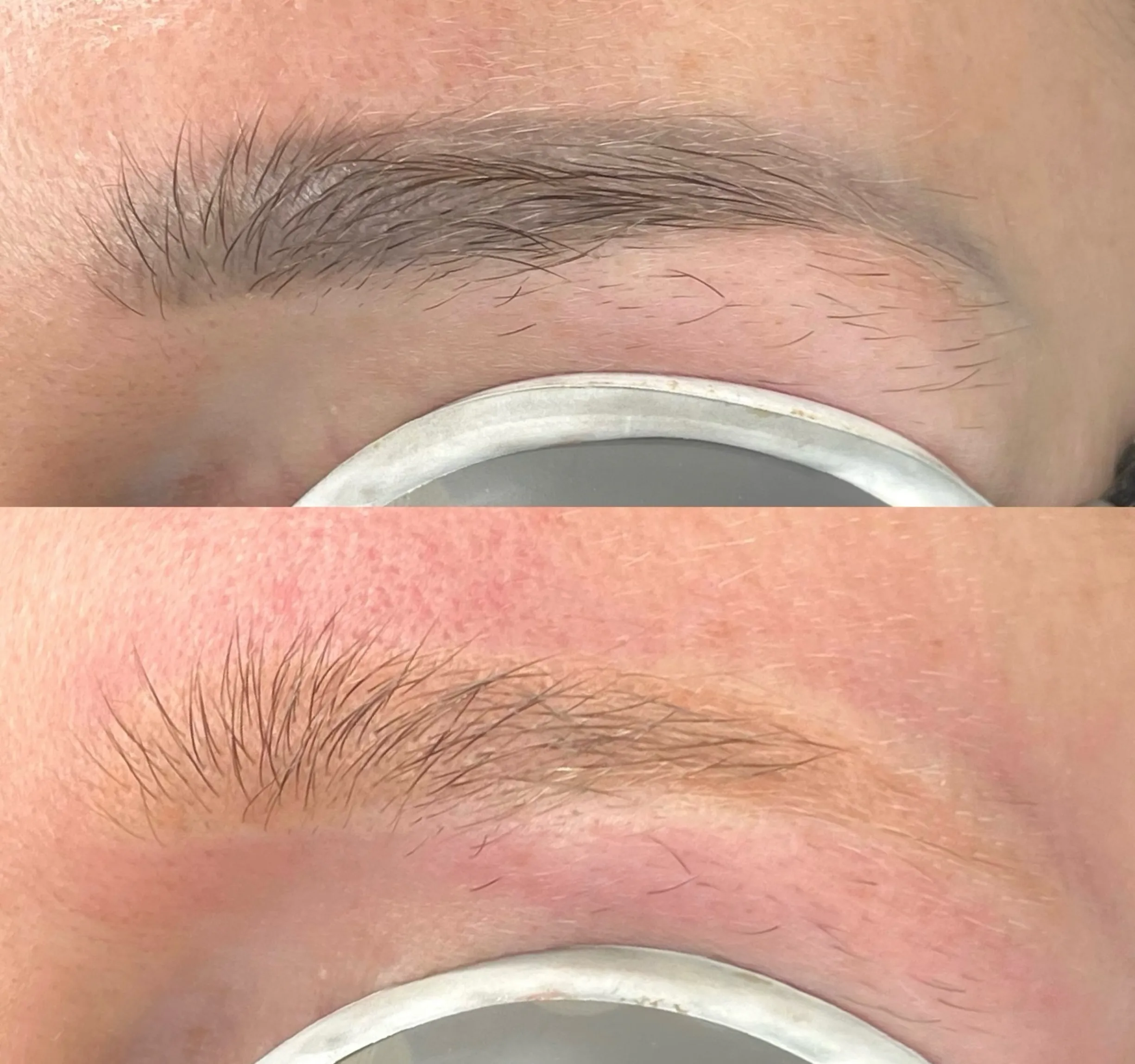
Choosing the right course is a huge decision for your beauty career. Whether you’re starting with brows or planning to add eyeliner later – good teaching should feel like a structured, safe, and supportive process – not rushed or vague.
If you’d like to get some real advice on choosing the right path, send us a message at Cosmetic Tattoo Studio Brisbane Face Figurati. We’re happy to help future stars build real skills – and avoid some of the pitfalls.
FAQ
How long should an eyebrow tattoo training course be?
At least 3–5 solid days – plus some model work and ongoing support.
Are one-day permanent make up courses safe?
No, they leave out the technique development and all the important infection prevention stuff.
Do I need to prioritise Infection Control?
Absolutely – it’s a basic requirement for health, safety, and the law in this business.
Do all eyebrow tattoo courses include model work?
The good ones do – if they don’t – that’s a big red flag.
Can I start with brows and do an eyeliner course later?
Yes – lots of artists do this – just make sure both the brow course and the eyeliner course are on the ball when it comes to hygiene and safety.